ClickFortify Logo
Back to Journal

Everything You Wanted to Know About Google Ads Custom Dashboards

01-01-202627 min readClickFortify Team
Everything You Wanted to Know About Google Ads Custom Dashboards
The digital advertising landscape has evolved dramatically, and with it, the need for comprehensive monitoring and analytics has become paramount. Google Ads custom dashboards represent a critical evolution in how businesses track, analyze, and optimize their advertising spend. This comprehensive guide explores everything you need to know about custom dashboards for Google Ads, Facebook Ads, and other paid advertising platforms.

Understanding the Foundation: What Are Custom Dashboards?

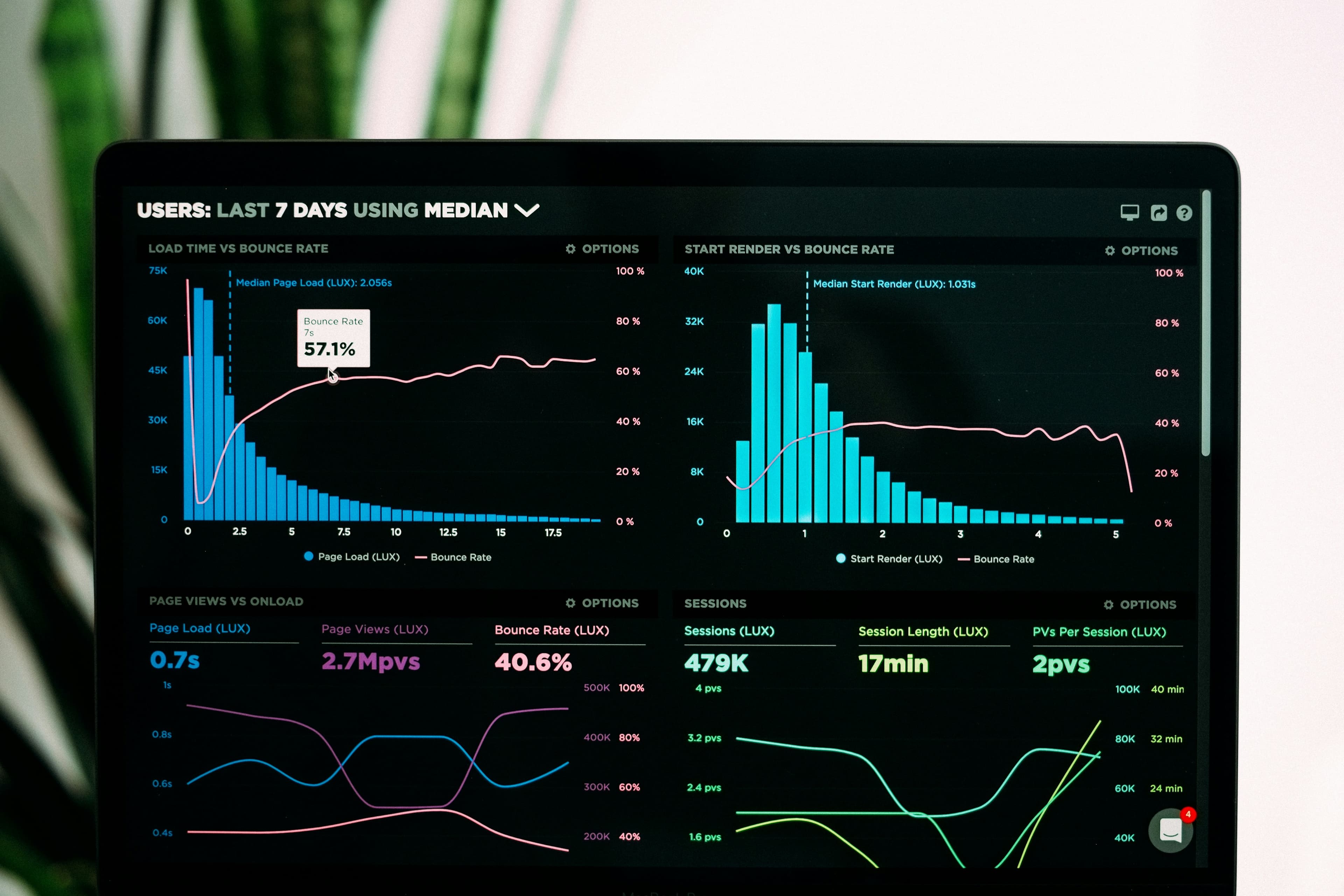
Custom dashboards are centralized command centers that consolidate your advertising data into actionable insights. Unlike the standard reporting interfaces provided by advertising platforms, custom dashboards allow you to create personalized views that track the metrics most important to your business objectives.
These dashboards pull data from multiple sources, including Google Ads, Facebook Ads, Microsoft Advertising, and other platforms, presenting everything in a unified interface. This consolidation eliminates the need to switch between multiple tabs and platforms, saving time while providing a holistic view of your advertising performance.

The Critical Problem: Invalid Click Activity

Before diving into dashboard features, it's essential to understand why sophisticated monitoring has become non-negotiable for advertisers. Invalid click activity represents one of the most significant threats to advertising ROI. This includes:

Click Fraud

Malicious actors deliberately clicking on your ads to drain your budget. Competitors may employ this tactic to exhaust your daily budget, reducing your market visibility while increasing their own.

Bot Traffic

Automated scripts and bots that generate fake clicks, accounting for a substantial portion of invalid traffic. These bots can be sophisticated enough to mimic human behavior, making detection challenging without advanced analytics.

Accidental Clicks

Genuine users who accidentally click ads, particularly on mobile devices where ad placement can lead to unintentional engagement.

Competitor Monitoring

Rivals checking your ad copy, landing pages, and strategies by repeatedly clicking your ads.
Studies suggest that click fraud can consume 10-30% of advertising budgets across various industries. Without proper monitoring and protection, businesses essentially burn thousands of dollars monthly on traffic that will never convert.

Core Dashboard Components for Comprehensive Monitoring

ClickFortify Dashboard Overview

Real-Time Click Tracking and Analysis

The foundation of any effective custom dashboard is real-time click monitoring. This feature tracks every click on your ads as it happens, providing immediate visibility into traffic patterns.
Advanced dashboards categorize clicks into multiple classifications: normal clicks from genuine users, suspicious clicks that exhibit questionable patterns, bad clicks identified as fraudulent or invalid, repeated clicks from the same IP addresses or devices, and conversion-generating clicks that lead to desired actions.
ClickFortify's dashboard provides granular click tracking that goes beyond surface-level metrics. By monitoring the click activity timeline, you can identify unusual spikes or patterns that indicate fraudulent activity. The system tracks click timestamps, IP addresses, user agents, geographic locations, and behavioral patterns to build comprehensive profiles of your traffic.

Geographic Click Distribution Intelligence

Understanding where your clicks originate provides crucial insights into both campaign performance and potential fraud. Custom dashboards should display geographic data at multiple levels, including country, region, city, and even specific IP ranges.
Geographic analysis reveals several critical patterns. If you're receiving substantial traffic from countries you don't target or serve, this indicates click fraud or misconfigured campaigns. High click volumes from data center locations rather than residential IPs suggest bot activity. Unusual concentration of clicks from specific regions, especially those known for click farms, warrants immediate investigation.
The ClickFortify platform highlights geographic anomalies automatically, allowing you to spot and address issues before they consume significant budget. Top performing countries are ranked by click volume, enabling you to identify both opportunities and threats quickly.

Device Analytics and User Behavior Patterns

Modern advertising spans desktop computers, mobile phones, and tablets, each with distinct user behavior patterns. Your dashboard should break down traffic by device type and analyze performance metrics for each category.
Device analytics reveal how users interact with your ads across platforms. Mobile traffic typically shows higher click volumes but may have lower conversion rates depending on your industry. Tablet users often exhibit browsing behavior similar to desktop users. Unusual device distributions, such as exclusively mobile traffic on campaigns typically dominated by desktop users, can indicate fraudulent activity.
Beyond basic device categorization, advanced dashboards analyze user agent strings to identify bot traffic masquerading as legitimate devices. They track screen resolutions, browser versions, operating systems, and device capabilities to build comprehensive profiles of your traffic sources.

Network Source Analysis

One of the most powerful fraud detection capabilities comes from network analysis. Not all networks are equal, and understanding the source of your traffic provides immediate insights into its legitimacy.
Custom dashboards should categorize clicks by network type: residential ISPs representing genuine users, mobile carriers indicating smartphone traffic, data centers which are legitimate for some business traffic but suspicious for consumer campaigns, VPN services that mask user locations and can indicate fraud attempts, hosting providers suggesting bot traffic, and proxy networks often used for fraudulent activity.
ClickFortify's network analytics automatically flags high-risk traffic sources. Data center traffic, in particular, deserves scrutiny since legitimate users rarely browse from these networks. VPN traffic requires contextual analysis—while some legitimate users employ VPNs for privacy, concentrated VPN traffic often indicates fraud.

Campaign Performance Breakdown

While monitoring invalid clicks is crucial, your dashboard must also track legitimate performance metrics across campaign types. Google Ads offers multiple campaign formats, each requiring specific tracking and optimization strategies.
Performance Max campaigns use machine learning to serve ads across Google's entire inventory. Your dashboard should track these campaigns separately, monitoring their contribution to overall performance and conversion rates.
Search campaigns represent high-intent traffic and typically deliver the strongest ROI. Dashboard tracking should include keyword performance, search term analysis, quality scores, and impression share metrics.
Display campaigns reach users browsing Google's network of partner sites. These campaigns typically generate higher volumes at lower costs but may also attract more invalid clicks. Your dashboard should monitor placement performance and identify problematic sites.
Video campaigns on YouTube require specialized metrics including view rates, engagement, and completion percentages. Shopping campaigns need product-level tracking, while App campaigns focus on installation and engagement metrics.

Conversion Tracking and Attribution

Ultimately, advertising success is measured by conversions, not just clicks. Your custom dashboard must track conversion performance comprehensively, including total conversions across all campaigns, conversion rate as a percentage of clicks, cost per conversion for ROI analysis, conversion value for ecommerce businesses, and conversion path analysis showing the user journey.
Advanced dashboards implement attribution modeling to understand how different touchpoints contribute to conversions. First-click attribution credits the initial interaction, last-click attribution credits the final touchpoint before conversion, linear attribution distributes credit equally across touchpoints, time-decay attribution gives more credit to recent interactions, and position-based attribution emphasizes first and last interactions.
ClickFortify provides conversion performance summaries that connect click quality to conversion outcomes. By correlating invalid click patterns with conversion data, you can quantify the exact impact of fraud on your bottom line.

User Interaction Metrics

Beyond conversions, understanding how users interact with your site after clicking ads provides valuable insights. Key interaction metrics include average time on site, pages per session, bounce rate, scroll depth, and engagement events like video plays, downloads, or form interactions.
High bounce rates combined with low time on site often indicate low-quality or fraudulent traffic. Users who immediately exit after clicking have no opportunity to convert, wasting your advertising spend. By monitoring these engagement metrics in your dashboard, you can identify traffic sources that deliver engaged visitors versus those generating worthless clicks.

Suspicious Click Identification

Modern dashboards employ machine learning algorithms to identify suspicious patterns automatically. These systems analyze multiple signals simultaneously to flag potentially fraudulent activity.
Suspicious click indicators include repeated clicks from the same IP address within short timeframes, clicks with unusual user agent strings or browser configurations, traffic from known data centers or proxy networks, clicks followed by immediate exits without page interaction, patterns matching known bot signatures, geographic mismatches between targeting and traffic sources, and abnormal click timing patterns suggesting automation.
ClickFortify's protection system continuously monitors these signals, automatically categorizing traffic and taking protective action when fraud is detected. The dashboard provides transparency into these decisions, allowing you to review flagged traffic and refine protection settings.

Advanced Dashboard Features for Professional Advertisers

Multi-Platform Integration

Professional advertisers rarely limit themselves to a single platform. Your dashboard should integrate data from Google Ads, Facebook Ads, Instagram Ads, LinkedIn Ads, Microsoft Advertising, Twitter Ads, TikTok Ads, and other platforms you utilize.
Unified reporting across platforms enables budget allocation decisions based on comprehensive performance data. You can identify which platforms deliver the best ROI, which audience segments perform strongest across channels, and how users interact with your brand across multiple touchpoints.

Automated Reporting and Alerts

Manual dashboard monitoring is time-consuming and inefficient. Advanced dashboards automate reporting and alerting, ensuring you're immediately notified of issues requiring attention.
Configure automated reports that deliver daily performance summaries, weekly trend analysis, monthly budget and ROI reports, and campaign-specific performance updates. These reports can be customized for different stakeholders, providing executives with high-level summaries while giving campaign managers detailed performance data.
Alert systems notify you immediately when critical thresholds are exceeded, including sudden click volume spikes, abnormal cost increases, dramatic performance drops, detection of new fraud patterns, or budget depletion warnings.

Blacklist and Exclusion Management

Once invalid traffic sources are identified, your dashboard should provide tools to block them automatically. Blacklist management features include IP address blocking to prevent specific addresses or ranges from seeing your ads, geographic exclusions to remove problematic countries or regions, placement exclusions for display campaigns to block low-quality websites, device exclusions when specific devices generate primarily fraudulent traffic, and network exclusions to block data centers, proxies, or VPN traffic.
ClickFortify's blacklist management integrates directly with your advertising accounts, automatically adding exclusions to prevent wasted spend. The system maintains a dynamic blacklist that updates as new threats are identified, providing continuous protection without manual intervention.

Billing and Budget Tracking

Financial oversight is essential for advertising management. Your dashboard should provide comprehensive billing and budget tracking, including daily spend monitoring across all campaigns and platforms, budget pacing analysis to ensure even spend distribution, forecasting tools that predict when budgets will be exhausted, cost allocation by campaign, ad group, and keyword, and fraud cost quantification showing exactly how much invalid clicks have cost.
Understanding the financial impact of click fraud transforms it from an abstract concern into a concrete business problem with measurable costs. ClickFortify's billing integration calculates potential savings from fraud protection, demonstrating clear ROI on your monitoring investment.

Team Collaboration and Access Management

Advertising management often involves multiple team members with different roles and responsibilities. Your dashboard should support team collaboration through user role management with customizable permission levels, activity logging that tracks who made which changes, commenting and annotation features for internal communication, shared reports that multiple team members can access, and approval workflows for budget or campaign changes.
Proper access management ensures account security while enabling efficient collaboration. Junior team members can monitor performance without risking accidental changes to live campaigns, while senior managers maintain oversight and approval authority.

Analytics and Reporting Engine

The true power of custom dashboards lies in their analytical capabilities. Beyond displaying raw data, sophisticated dashboards analyze patterns, identify trends, and generate actionable insights.
Advanced analytics features include trend analysis that identifies performance patterns over time, comparative reporting that benchmarks current performance against historical data, cohort analysis that tracks user groups through their journey, funnel visualization that shows where users drop off in the conversion process, and predictive analytics that forecast future performance based on historical patterns.
ClickFortify's analytics engine processes millions of data points to identify optimization opportunities. The system might detect that certain keywords consistently attract fraudulent traffic, recommend geographic targeting adjustments based on conversion patterns, or identify optimal bidding times when competition is lower and conversion rates are higher.

Protection Features: The Hidden Truth About Click Fraud Defense

Most advertisers focus on tracking and reporting, but the most sophisticated dashboards go further by actively protecting your campaigns from invalid traffic. This is where platforms like ClickFortify differentiate themselves from basic analytics tools.

Real-Time Traffic Filtering

The most effective protection happens before invalid clicks consume your budget. Real-time filtering analyzes each click as it occurs, blocking suspicious traffic before it reaches your landing page or registers in your advertising account.
This protection operates through multiple layers. The first layer analyzes IP reputation, immediately blocking traffic from known fraud sources, data centers, and suspicious networks. The second layer examines behavioral signals like mouse movements, click patterns, and page interaction to distinguish humans from bots. The third layer applies machine learning models trained on millions of traffic samples to identify sophisticated fraud attempts.

Automatic Platform Integration

Protection is only valuable if it actually prevents wasted spend. ClickFortify integrates directly with Google Ads and other platforms, automatically adding detected fraudulent sources to your exclusion lists. This integration operates in near real-time, typically blocking sources within minutes of detection.
The integration extends to multiple exclusion types. IP addresses are blocked at the campaign level when available, geographic exclusions remove problematic regions, placement exclusions block low-quality sites on display networks, and audience exclusions prevent remarketing to detected fraudsters.

Adaptive Learning Systems

Fraudsters constantly evolve their tactics, requiring protection systems that adapt accordingly. Modern dashboards employ machine learning algorithms that improve over time, learning from new fraud patterns and adjusting detection criteria automatically.
These adaptive systems analyze false positives to refine detection and prevent blocking legitimate users, identify emerging fraud techniques before they become widespread, adjust protection intensity based on your risk tolerance, and share threat intelligence across their network to protect all users from newly discovered threats.

Setting Up Your Custom Dashboard: Best Practices

Implementing a custom dashboard requires careful planning to ensure it meets your specific needs while providing comprehensive protection and insights.

Define Your Key Performance Indicators

Before configuring your dashboard, clearly identify which metrics matter most to your business. Different businesses prioritize different KPIs. Ecommerce companies focus on return on ad spend, conversion value, and customer acquisition cost. Lead generation businesses track cost per lead, lead quality, and lead-to-sale conversion rates. Brand awareness campaigns monitor impressions, reach, and engagement metrics. Local businesses emphasize local pack visibility, call tracking, and store visits.
ClickFortify's dashboard customization allows you to prioritize these KPIs, ensuring the most important metrics are prominently displayed while less critical data remains accessible but doesn't clutter your main view.

Configure Baseline Thresholds

Effective alerting requires establishing baseline performance expectations. Analyze your historical data to understand normal performance ranges for click volume, conversion rates, cost metrics, and traffic quality indicators.
With baselines established, configure alerts that trigger when performance deviates significantly. Set alerts for click volumes exceeding 150% of normal levels, conversion rates dropping below historical averages by specified thresholds, costs increasing unexpectedly, and fraud detection rates spiking above normal levels.

Implement Tracking Code Properly

Custom dashboards can only work with data they can access. Proper tracking code implementation is essential for comprehensive monitoring. Install tracking pixels on all landing pages to monitor user behavior after clicks, implement conversion tracking for all valuable actions, configure event tracking for meaningful interactions like form submissions, downloads, or video views, and enable enhanced measurement features for detailed user journey analysis.
ClickFortify provides streamlined tracking code that captures comprehensive data while maintaining site performance. The code implements server-side validation to prevent click injection attacks and ensures data accuracy even when users have ad blockers or privacy tools enabled.

Establish Review Routines

Even with automated alerts, regular dashboard reviews ensure you maintain control over your campaigns and catch issues that might not trigger automatic notifications. Establish review routines that include daily quick checks of key metrics and alert status, weekly deep dives into campaign performance and optimization opportunities, monthly comprehensive reviews with stakeholders, and quarterly strategic planning sessions informed by trend analysis.

The ROI of Custom Dashboards with Fraud Protection

Investing in sophisticated dashboard and protection systems like ClickFortify delivers measurable returns across multiple dimensions.

Direct Cost Savings

The most obvious benefit comes from eliminating wasted spend on invalid clicks. Consider a business spending $10,000 monthly on Google Ads with a 20% invalid click rate (a conservative estimate for unprotected accounts). That business wastes $2,000 monthly or $24,000 annually on fraudulent traffic.
ClickFortify's protection system typically reduces invalid clicks by 80-95%, saving $19,200 to $22,800 annually for this example business. Even accounting for platform costs, the net savings are substantial. For larger advertisers spending $100,000+ monthly, annual savings can reach hundreds of thousands of dollars.

Improved Campaign Performance

Beyond preventing fraud, better monitoring enables better optimization. When you can accurately track which campaigns, keywords, and audiences deliver genuine conversions, you can optimize more effectively.
Businesses using comprehensive monitoring typically see performance improvements including 15-30% increases in conversion rates through better traffic quality, 20-40% reductions in cost per conversion by eliminating fraud and optimizing toward quality traffic, and 25-50% improvements in overall ROI through combined fraud prevention and optimization.

Time Savings and Efficiency

Manual monitoring and fraud detection consume significant time. Advertising managers might spend 5-10 hours weekly reviewing reports, investigating suspicious activity, and manually adding exclusions.
Automated dashboards and protection systems reclaim this time, allowing teams to focus on strategy and optimization rather than fraud investigation. For a marketing manager earning $75,000 annually, reclaiming 10 hours weekly represents roughly $36,000 in opportunity cost savings annually.

Competitive Advantage

Finally, comprehensive monitoring provides strategic advantages. You can identify market trends before competitors, understand which audiences are most valuable, discover untapped geographic or demographic opportunities, and protect your budget while competitors waste theirs on fraud.
In competitive markets, these advantages compound over time. Businesses with superior intelligence make better decisions, optimize faster, and ultimately capture more market share at lower costs.

Hidden Truths About Advertising Dashboards

Having covered the fundamentals, let's explore less discussed realities about custom dashboards and advertising monitoring that most providers don't advertise.

The Incomplete Nature of Platform-Native Reporting

Google Ads, Facebook Ads, and other platforms provide built-in reporting, leading many advertisers to question whether custom dashboards are necessary. The truth is that platform-native reporting has significant limitations.
First, platforms only show you what they want you to see. They have financial incentive to make performance appear as positive as possible, encouraging continued and increased spending. Metrics are carefully selected and presented to support this goal.
Second, platforms lack sophisticated fraud detection. While Google has made efforts to refund invalid clicks, their detection is limited and retroactive. Many fraudulent clicks are never identified or refunded, silently consuming your budget.
Third, cross-platform analysis is impossible. If you run campaigns on multiple platforms, you must manually compile data from different sources, making comprehensive analysis time-consuming and error-prone.
Fourth, platform reporting provides limited historical data. Most platforms restrict historical data access to 12-24 months, preventing long-term trend analysis. Custom dashboards maintain comprehensive historical records indefinitely.

The Dark Side of Competitor Activity

Click fraud from competitors is more prevalent than most advertisers realize. Industry studies suggest competitor click fraud accounts for 20-30% of all invalid clicks in competitive industries.
Competitors engage in this behavior for several reasons. Exhausting your daily budget reduces your ad visibility, giving them more impression share. Understanding your landing pages and offers helps them refine their own strategies. Some simply want to damage your business financially.
The sophisticated nature of competitor fraud makes it particularly difficult to detect. Unlike bot traffic with obvious patterns, competitor clicks often come from residential IPs with legitimate device and browser profiles. Only behavioral analysis revealing repeated clicks without conversion activity exposes this fraud.
ClickFortify's protection system uses behavioral analysis and pattern matching to identify competitor reconnaissance activity, automatically blocking these sources before they consume significant budget.

The Attribution Challenge

Proper conversion tracking and attribution remain unsolved problems for most advertisers. The customer journey has become increasingly complex, with users interacting with brands across multiple devices, platforms, and touchpoints before converting.
Traditional last-click attribution dramatically oversimplifies this reality, often misallocating credit and leading to suboptimal budget allocation. A user might discover your brand through a Facebook ad, research on mobile, click a Google search ad from desktop, and finally convert after reading reviews.
Under last-click attribution, Google receives full credit while Facebook receives none, despite Facebook initiating the journey. This leads advertisers to underfund awareness campaigns and overfund conversion campaigns, ultimately limiting growth.
Advanced custom dashboards address this through multi-touch attribution modeling, tracking users across devices and platforms to understand the complete conversion path. This intelligence enables proper budget allocation across the full funnel.

The Privacy Paradox

Growing privacy regulations and browser restrictions create challenging tensions for advertising monitoring. GDPR, CCPA, and similar regulations limit data collection and tracking. Browser features like Intelligent Tracking Prevention and Privacy Sandbox further restrict monitoring capabilities.
These privacy measures, while beneficial for consumers, make comprehensive advertising analysis more difficult. Third-party cookies, long the foundation of digital advertising tracking, are being phased out. Cross-device tracking has become nearly impossible without user authentication.
Custom dashboards must navigate this privacy landscape carefully, implementing compliant tracking while still providing meaningful insights. ClickFortify employs privacy-compliant tracking methods including server-side tracking that doesn't rely on third-party cookies, cookieless fingerprinting using non-PII data points, and consent management systems that respect user privacy preferences.

The Bot Sophistication Arms Race

Bot traffic has evolved dramatically. Early bots were easily detected through simple signals like missing JavaScript or suspicious user agents. Modern bots employ sophisticated evasion techniques including full browser emulation with JavaScript execution, randomized user agents and device profiles, residential proxy networks that mask bot origin, human-like interaction patterns including mouse movements and scrolling, and CAPTCHA solving capabilities.
This sophistication means simple detection rules no longer work. Effective fraud detection requires machine learning models trained on millions of traffic samples, behavioral analysis that identifies patterns invisible to rule-based systems, and continuous adaptation as bots evolve new evasion techniques.
ClickFortify invests heavily in bot detection research, continuously updating detection models to identify emerging threats. The platform's machine learning systems analyze hundreds of behavioral and technical signals simultaneously, achieving detection accuracy that simple rule-based systems cannot match.

Emerging Dashboard Capabilities: The Future of Advertising Intelligence

Custom dashboard technology continues evolving rapidly. Understanding emerging capabilities helps you prepare for the next generation of advertising intelligence.

Predictive Analytics and Forecasting

Current dashboards primarily report historical data and present-moment performance. The next generation will predict future outcomes with increasing accuracy. Machine learning models trained on your historical data will forecast future performance under different scenarios, enabling proactive rather than reactive management.
Predictive capabilities emerging in advanced platforms include budget forecasting that projects when campaigns will exhaust budgets based on current pacing, seasonal adjustment predictions that account for cyclical performance patterns, conversion probability scoring that identifies which traffic sources are most likely to convert, and fraud risk forecasting that predicts when new fraud patterns may emerge.

Automated Optimization Recommendations

Beyond reporting problems, future dashboards will recommend specific solutions. AI systems will analyze your campaigns comprehensively, identifying optimization opportunities humans might miss and suggesting concrete actions.
These recommendations might include bid adjustments for specific keywords or audiences based on performance patterns, ad copy variations based on analyzing top performers, targeting refinements expanding into high-potential demographics or geographies, and budget reallocation suggestions moving spend toward highest-ROI campaigns.
Some platforms, including ClickFortify, are beginning to implement automated optimization where the system makes approved changes automatically rather than simply recommending them. This moves from monitoring to true campaign management.

Voice and Natural Language Interfaces

Current dashboards require learning complex interfaces with multiple menus and options. Emerging voice and natural language interfaces will make data access intuitive and immediate.
Instead of navigating through reports, you'll simply ask questions: "What campaigns are performing best this week?" "Which geographic regions show the highest fraud rates?" "Compare my current performance to last month." The system will understand natural language queries and provide immediate answers with supporting visualizations.
This technology, powered by large language models, will democratize advertising analytics by removing the learning curve associated with complex interfaces.

Augmented Reality Data Visualization

While still experimental, AR technologies promise revolutionary approaches to data visualization. Instead of viewing dashboards on flat screens, you'll interact with data in three-dimensional space.
Imagine visualizing your global campaign performance as a 3D map where metrics are represented by height, color, and size, making patterns immediately obvious. Time series data could be laid out spatially, allowing you to walk through your campaign history. Campaign relationships and attribution paths could be represented as 3D networks showing connections between touchpoints.
These interfaces remain years away from mainstream adoption but represent the ultimate evolution of data visualization.

Implementation Guide: Deploying Your Custom Dashboard

Having covered what custom dashboards can do, let's address practical implementation. How do you actually deploy a comprehensive monitoring and protection system for your advertising campaigns?

Assessment Phase

Begin by assessing your current situation. Document all advertising platforms you use, current monthly spend by platform, existing tracking and analytics implementations, known issues with fraud or performance, team size and roles, and budget available for monitoring and protection tools.
This assessment provides the foundation for your implementation plan, ensuring your dashboard solution aligns with actual needs rather than unnecessary features.

Platform Selection

Choose a dashboard platform based on your requirements. Evaluate options across several criteria including platform coverage supporting all advertising platforms you use, fraud detection capabilities and accuracy, integration depth with advertising accounts, reporting flexibility and customization, team collaboration features, and pricing structure relative to your budget.
ClickFortify offers comprehensive capabilities across these dimensions, with particular strength in fraud detection and automatic protection. The platform supports major advertising networks while providing deep integration that enables automatic protective actions rather than simple reporting.

Tracking Implementation

Once you've selected a platform, implement tracking code across your web properties. This typically involves adding JavaScript tracking code to your website header, implementing conversion tracking on thank you pages, setting up event tracking for valuable interactions, and configuring ecommerce tracking if applicable.
Most platforms, including ClickFortify, provide detailed implementation guides and even offer implementation assistance to ensure tracking is configured correctly from the start. Proper implementation is crucial—incomplete tracking creates blind spots in your monitoring.

Configuration and Customization

With tracking implemented, configure your dashboard to match your needs. This includes customizing your main dashboard view to highlight priority KPIs, setting up automated reports for different stakeholders, configuring alert thresholds based on your baselines, establishing protection rules and blacklist parameters, and creating user accounts with appropriate permissions for team members.
Take time during this phase to ensure the dashboard truly meets your needs. Many platforms offer extensive customization—leverage it to create a monitoring system that fits your workflow rather than forcing your workflow to match the tool.

Testing and Validation

Before relying on your new dashboard for critical decisions, validate its accuracy. Compare dashboard data against platform-native reporting to ensure data accuracy, verify that conversion tracking captures all important actions, test fraud detection by examining flagged traffic samples, confirm that automated protections are blocking appropriately, and validate alert systems by simulating threshold violations.
This validation phase prevents unpleasant surprises after you've begun relying on the system for decision-making.

Team Training

Even the best dashboard provides little value if team members don't understand how to use it effectively. Invest in training that covers dashboard navigation and key features, interpreting metrics and understanding what they indicate, identifying fraud patterns and understanding protection systems, generating reports and scheduling automated delivery, and responding to alerts appropriately.
ClickFortify provides comprehensive training resources including documentation, video tutorials, and live training sessions to ensure your team can leverage the platform's full capabilities.

Ongoing Optimization

Dashboard deployment isn't a one-time project but an ongoing process. Schedule regular reviews to assess whether your dashboard configuration still meets evolving needs, analyze alert accuracy and adjust thresholds to reduce false positives, review protection rules and update based on emerging fraud patterns, expand tracking to capture additional valuable data points, and gather team feedback and implement requested improvements.

Measuring Success: KPIs for Your Dashboard Investment

How do you know whether your custom dashboard investment is delivering value? Track specific success metrics:

Fraud Reduction Metrics

The primary goal of sophisticated monitoring is reducing invalid traffic. Track percentage of traffic identified as fraudulent before and after implementation, estimated monthly spend saved through fraud prevention, reduction in bounce rate as low-quality traffic is filtered, and improvement in average time on site as traffic quality increases.
ClickFortify users typically see 50-80% reductions in fraudulent traffic within the first month of implementation, with ongoing improvements as the system learns your specific fraud patterns.

Performance Improvement Metrics

Better data enables better optimization. Monitor conversion rate improvements as you optimize toward quality traffic, cost per conversion reductions through better targeting, overall return on ad spend improvements, and reduced time between identifying and addressing issues.
These improvements often equal or exceed direct fraud savings, making comprehensive monitoring valuable even in industries with relatively low fraud rates.

Operational Efficiency Metrics

Automation should reduce time spent on manual monitoring and reporting. Track hours per week spent on campaign management before and after implementation, time saved through automated reporting, reduction in time investigating suspicious activity, and increase in time available for strategic optimization.
For marketing teams, these efficiency gains often justify dashboard investments even without considering fraud savings.

Strategic Value Metrics

The most significant but hardest to quantify benefits come from better strategic decisions. While difficult to measure precisely, consider whether your dashboard enables earlier identification of market trends, better understanding of customer journey and attribution, more effective budget allocation across campaigns and platforms, and improved competitive positioning.

Conclusion: The Non-Negotiable Nature of Modern Advertising Monitoring

The digital advertising landscape has become too complex and too fraud-ridden to manage without sophisticated monitoring and protection. The question is no longer whether you need a custom dashboard but rather which platform best meets your specific needs.
Businesses still relying on platform-native reporting are flying blind, unaware of how much budget they waste on fraud and unable to optimize effectively across their full advertising portfolio. The cost of this blindness compounds daily, measured both in direct wasted spend and missed optimization opportunities.
Comprehensive monitoring platforms like ClickFortify transform advertising from a costly uncertainty into a measurable, optimizable, and protectable investment. By consolidating data across platforms, identifying and blocking fraudulent activity, enabling sophisticated attribution and analysis, and automating routine monitoring and protection tasks, these systems deliver ROI through multiple channels simultaneously.
The hidden truth about advertising dashboards is that they're not optional luxury tools but fundamental requirements for serious advertisers. In a landscape where 10-30% of clicks are fraudulent and customer journeys span multiple devices and platforms, attempting to manage campaigns without comprehensive monitoring is simply irresponsible stewardship of marketing resources.
Whether you're a small business spending a few thousand monthly or an enterprise managing millions in advertising spend, the mathematics are identical: comprehensive monitoring pays for itself many times over while providing strategic advantages that compound over time.
The only question is whether you'll implement these systems proactively or continue wastefully learning through expensive trial and error. The platforms exist, the technology works, and the ROI is proven. The decision is yours.

Start Protecting Your Enterprise Campaigns Today

ClickFortify provides enterprise organizations with the sophisticated, scalable click fraud protection they need to safeguard multi-million dollar advertising investments.

Unlimited campaign and account protection
Advanced AI-powered fraud detection
Multi-account management dashboard
Custom analytics and reporting

Enterprise Consultation

Speak with our solutions team to discuss your specific requirements.

Share this article
More Articles
ClickFortify Logo

Click Fortify Team

PPC Security & Ad Fraud Protection Experts

Click Fortify is powered by a team of top PPC experts and experienced developers with over 10 years in digital advertising security. Our specialists have protected millions in ad spend across Google Ads, Meta, and other major platforms, helping businesses eliminate click fraud and maximize their advertising ROI.

10+ Years ExperienceGoogle Ads CertifiedAd Fraud Specialists